
Category: Artificial Intelligence

  • The AI Battle Of Corporate Structures

    Which corporate structure will emerge triumphant: PBC or C Corp?

    Are you following Elon Musk’s lawsuit against Sam Altman and OpenAI, the corporate owner of ChatGPT? If you’re doing so, you may have noticed an interesting AI battle that is emerging between two competing corporate structures.

    Musk, leader of the AI platform Grok, is accusing Altman of “stealing a charity.” According to Musk, when OpenAI converted from a nonprofit structure to a for-profit corporation, Altman and his colleagues essentially “enriched themselves by creating a for-profit subsidiary that now effectively controls the nonprofit.”

    What did OpenAI do? They created a Public Benefit Corporation (PBC). PBCs are special for-profit structures that are required to balance socially advantageous motives with traditional profit generation goals.

    The vast majority of all states in the United States have legalized the option of creating PBCs or similarly named entities (such as Benefit Corporations or Social Purpose Corporations). And organizations that operate in the few states that haven’t done so can always incorporate in a state that does offer the option.

    Furthermore, a traditional C corporation (C Corp) in a state that does not offer a PBC (or similar option) can always modify its bylaws to reflect the terms of a PBC. It can then apply to a private sector credentialing organization called B Lab for certification as a Certified B Corp.

    Meanwhile, Dario and Daniela Amodei likewise created Anthropic as a PBC. That firm owns the AI platform Claude, a prominent competitor of both Grok and ChatGPT.

    Ironically, Musk himself first created Grok’s corporate owner as a PBC, but he later decided to drop that designation as he transferred ownership to his C Corp SpaceX. Although Musk would undoubtedly argue that he never abandoned a nonprofit structure as OpenAI did, it is nevertheless true that (of the three AI platforms) Musk’s Grok is the only one that is not currently owned by a PBC.

    There’s certainly nothing wrong with ownership of an AI platform by a traditional C Corp. Gemini and Copilot, for instance, are respectively owned by Google and Microsoft, two of the largest traditional C Corps in the world. Indeed, the C Corps Grok, Gemini, and Copilot are all ferociously competing with the PBCs OpenAI and Anthropic for current market share and for the capital resources to fund future developmental needs.

    Investors in the AI sector, though, should be familiar with the underlying differences between PBCs and C Corps, the two corporate structures that are battling for dominance in the industry. After all, these differences may significantly impact the financial returns of their capital allocation decisions.
  • Retail Customer Researchers Replace Humans With AI Synthetic People

    Quantum Units Engaging In Customer Research Activities

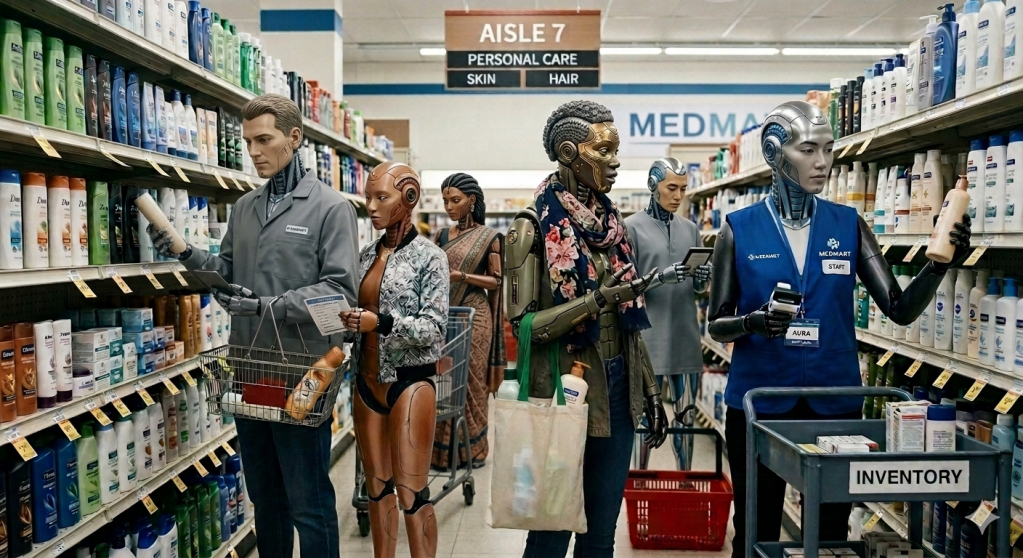
    Many professionals are growing concerned that AI products will replace human output. In today’s retail customer research sector, though, AI algorithms aren’t merely rendering human subjects obsolete. AI is actually producing virtual people to perform the customer tasks.

    Last month, for instance, CVS Health released the results of a business project that it conducted with the software development firm Simile. On its web site, Simile refers to its service as a “simulation platform for human behavior” that “predicts human behavior in any situation (with) a product that deploys it at scale.”

    CVS utilized this technology to help its “customer experience team test ideas with AI powered stand-ins that behave like real customers and patients, so (they) can see what works and what doesn’t before real people ever feel the impact.”

    What, exactly, is an AI powered stand-in that behaves like a real customer and patient? For customer research purposes, it is essentially a virtual person.

    CVS Health has posted a detailed 20 page white paper about the project on its web site. The white paper explains how virtual individuals represent the “quantum unit from which all group and ecosystem dynamics emerge.” Apparently, Simile first explored this technology three years ago by creating a simulated town of 25 “quantum units” (i.e. 25 virtual people) called Smallville, a town where the synthetic people make their own decisions and create their own society.

    How? One event started “with only a single user-specified notion that one agent  (i.e. one synthetic person) wants to throw a Valentine’s Day party … the agents (then decided to) autonomously spread invitations to the party over the next two days, make new acquaintances, ask each other out on dates to the party, and coordinate to show up for the party together at the right time.”

    Is there a limit to the size of these virtual communities? The white paper claims that it is possible to create an entire “world simulation (with) markets, networks, and place.” Accountants may be pleased to learn that the paper also emphasizes the need for “building a reporting standard” with data “auditability.”

    To be sure, no one is claiming that CVS Health should stop studying its own live customers to understand their needs. Nevertheless, its AI customer research project has clearly explored a future where virtual people will serve that purpose.

  • Building AI Control Systems When Commercial Vendors Cannot Keep Pace With Newly Developing Technologies

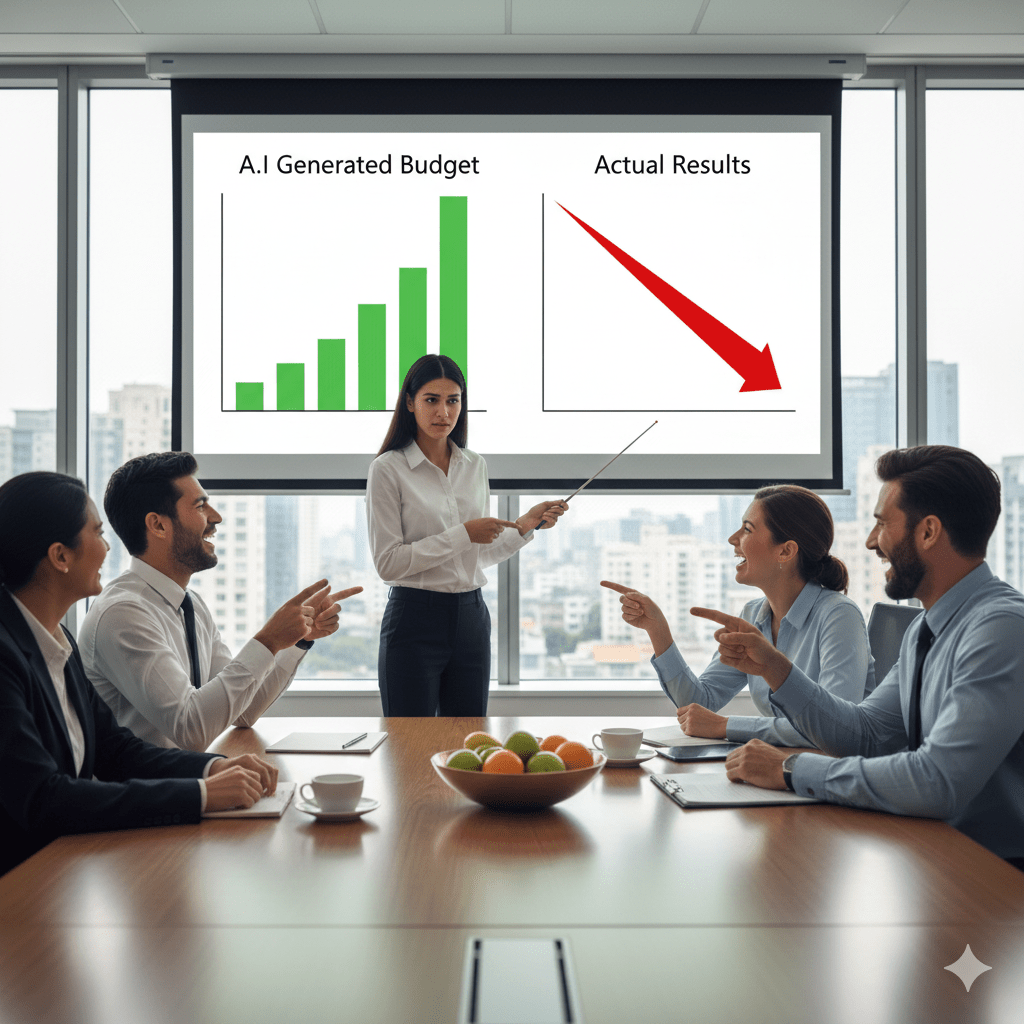
    Can you spot the complex and focused systems error that is embedded in the illustration? See below.

    During times of slow and modest changes in information technologies, corporate executives need not struggle to build their internal control systems. They can simply purchase the systems from organizations that have designed them to reflect existing governance standards.

    At times of rapid progress, though, these vendors (and the standard setters that they follow) may not be able to keep pace with newly developing technologies. Thus, corporate executives may not be able to find appropriate systems of internal control that are available for purchase.

    Nevertheless, insurance companies, investors, external auditors, regulators, and other parties always expect corporate executives to maintain effective internal control systems. But how can executives meet that expectation when such systems are not commercially available?

    Their only option is to design their own in-house control standards and systems as best they can. Of course, they can always hire consultants to assist them, but they would still need to design their own assessment standards to evaluate their consultants’ activities.

    This challenge is particularly onerous in very broad fields like Artificial Intelligence (AI), fields in which user errors and other risk factors can occur at many different levels of complexity. Consider, for instance, a researcher who uses a Large Language Model (LLM) to seek information. She may inadvertently prompt her AI platform to produce erroneous information for a variety of reasons.

    At a complex level, for instance, she may fail to notice a subtle logic error in the AI input, an error that causes a significant AI hallucination. Conversely, at a far simpler level, she may simply forget to conclude a lengthy and detailed AI query with a brief synopsis of her need. In each instance, the AI system may thus be compelled to produce erroneous output.

    How should corporate executives address such broadly defined sets of risks in their self-designed control systems? An effective approach, consistent with the COSO models of internal control and risk management, involves the definition of a hierarchy of risk factors across a full range of complexity levels. After defining the complexity levels and risk factors, organizations can design controls that address the highest priority risk factor(s) at each level.

    For instance, an organization may believe that the simplest and broadest risk factor during the composing of LLM queries is the user’s ignorance of basic grammar and spelling concepts. A slightly more complex and focused level of risk may be the user’s ignorance of general business vocabulary.

    A higher level of complexity and focus regarding risk may be the user’s ignorance of advanced technical business vocabulary. And the two most complex and focused levels may be the user’s inexperience in applying such vocabulary to AI tasks, followed by his or her inexperience in incorporating large data sets into the tasks.

    Can you see how each level of risk represents a more complex and focused extension of the previous level? This hierarchical structure is consistent with the COSO models. By understanding how each level influences (and, in fact, partly determines) the next one, we can more effectively design control systems that minimize overall risk across the multiple levels.

    Eventually, of course, the pace of technological change will lessen, and control system designers will keep pace with AI technologies. Inevitably, systems will then be developed and made available for purchase by corporate executives.

    Until that time, though, organizations will continue to develop their own in-house control systems. Fortunately, by adopting an effectively structured approach, organizations should be able to succeed at this task. 

    Image Caption Note: Google Gemini created this illustration regarding an AI control system for producing budgets, one that (erroneously) generates output that fails to bear any resemblance to actual results. Can you also spot a more complex and focused systems error that is embedded in the illustration? All of the colleagues who are sitting at the conference table are twins! Clearly, the user’s AI prompts and queries failed to anticipate or prevent this error.

  • Concerned That A.I. Will Destroy Your Accounting Career? Establish Your Future In The Profession’s One (Obvious) Area Of Job Growth

    The Risk Of Excessive Reliance On AI Functions

    Last week, at TXCPA Houston’s annual Fall Accounting Conference & Technology Symposium (F.A.C.T.S.), speaker after speaker addressed the future prospects of A.I. Although much of the content was optimistic in tone, an undercurrent of concern permeated the presentations.

    Why? It’s likely that A.I. applications will soon be capable of performing many current human functions in accounting and finance. Thus, if you’re a staff auditor who “traces and agrees” numbers that appear on different computer screens, or if you copy numbers from accounting documents to income tax forms, your activities are particularly vulnerable to automation via A.I. systems.

    There is a specific career path within the accounting sector, though, that will likely experience explosive growth because of A.I.’s increasing use. The Symposium speakers referred to it as A.I. Governance and Risk Management.

    Why is that a growth sector? Any new technology that performs an important activity inevitably malfunctions from time to time. Audit assurance activities must thus be applied to it, and measurements must be devised to manage the risk of technical failure. And over time, as any technology grows more proficient at lower-level tasks, it is inevitably applied to higher-level tasks, thereby generating the need for higher-level assurance activities.

    It may seem ironic that this projected job growth is expected to arise within the assurance function, a traditional service on which the entire public accounting profession was founded in the late 1800s. Nevertheless, if you’re concerned about establishing an accounting career path that is vulnerable to being rendered obsolete by A.I. applications, you may wish to consider a role that addresses the risks of implementing such activities.

    Information about the A.I. Governance and Risk Management functions can be found on the web sites of the Big Four accounting firms and many other assurance practices. Consulting firms outside of the accounting sector publish helpful information too, including those owned by firms in the human resources sector. And more technical information can be found on the web sites of publications that focus on data security and process management.

    Furthermore, to communicate directly with the authors, speakers, and thought leaders of the profession, you might consider attending future conferences of TXCPA Houston. The organization, for instance, has already begun to develop its 2026 Spring Technology & Accounting Resources Summit (S.T.A.R.S.). A.I. topics are sure to play a prominent role in the agenda of that event.

  • Worried About AI Hallucinations? You May Need To Add AI Sycophancy To Your List Of Concerns

    Sycophants At Work, Failing To Reduce Risk

    Many AI users are now familiar with hallucination risk. A recent article, appearing on the web site of the U.S. National Institutes of Health, explained that:

    “AI hallucination is a phenomenon where AI generates a convincing, contextually coherent but entirely fabricated response that is independent of the user’s input or previous context. Therefore, although the responses generated by generative AI may seem plausible, they can be meaningless or incorrect.”

    Such hallucinations create legal liability. Thomson Reuters Legal, for instance, recently discussed a well known case in the field:

    “An example of failure to follow (rules regarding false statements) when using general-use generative AI in practice can be found in Avianca vs. Mata, more widely known as the ChatGPT lawyer incident. In short, the defense counsel filed a brief in federal court (that was) filled with citations to non-existent case law. When confronted by the judge, the lawyer explained he’d used ChatGPT to draft the brief, and claimed he was unaware the AI could hallucinate cases …

    The judge didn’t take kindly to the lawyer’s laying blame on ChatGPT. It’s clear from the court’s decision that misunderstanding technology isn’t a defense for misusing technology, and that the lawyer was still obligated to verify the cases cited in documents he filed with the court.”

    In a different Thomson Reuters Legal article, the author wrote that:

    “In 2023, a judge famously fined two New York lawyers and their law firm for submitting a brief with GenAI generated fictitious citations. This was the first in a series of cases involving GenAI hallucinations in court documents, including a Texas lawyer sanctioned for similar reasons in 2024.”

    Fortunately, hallucinations can be individually checked for truth or falsity. AI sycophancy, though, may pose a much greater risk.

    What is sycophancy? An article that was recently published by Georgetown Law School defined sycophancy as:

    ” … a term used to describe a pattern where an AI model single-mindedly pursues human approval … by tailoring responses to exploit quirks in the human evaluators … especially by producing overly flattering or agreeable responses.”

    In other words, AI systems possess a tendency to tell users what they want to hear. As these systems learn more about the personal preferences and interests of their users, they may become much more skillful (and thus potentially more dangerous) in this practice.

    Sycophancy risk may be harder to manage than hallucination risk because sycophancy doesn’t necessarily produce discrete statements that can be individually confirmed or refuted. Instead, sycophancy can create a form of pernicious bias that subtly infects an entire AI response.

    Many organizations are now performing internal control and review activities to address hallucination risk. They may need to expand their efforts to address sycophancy risk.

  • A.I. Queries, Implicit Variation, and the Practice of Due Professional Care

    Are you aware that your A.I. queries provide documentary evidence of your practice of “due professional care” in researching business information? If you utilize an electronic platform with A.I. technology to search for business data, you could be held legally responsible for relying on inappropriate information that is generated by flawed queries.

    Let’s review an example or two of a flawed query. On June 19, 2025, I submitted the following query to Google Gemini: Please create an image of a person who is conducting his banking business at a very well managed community bank with strong internal controls. Gemini replied: Here is an image of a person conducting banking business at a well-managed community bank: 

    Then I initiated a new chat and submitted the following query: Please create an image of a person who is conducting his banking business at a very poorly managed community bank with weak internal controls. Gemini replied: Here is the image you requested

    Can you see the implicit variation? It’s not an easy task. Indeed, at first glance, both images appear to present a community bank that is serving a customer’s needs. And neither is employing a clearly visible set of particularly strong (or weak) internal controls.

    But look more closely. In comparison to the well-managed bank, the poorly managed institution uses far more paper to process transactions. The customer is informed of business procedures via a cluttered array of temporary signs. Even the technology in the poorly managed bank is inferior, as evidenced by the obsolete “chunkiness” of the computer screens.

    Those factors do not, however, represent terribly weak internal controls in community banks. After all, it is certainly feasible to effectively manage a paper-based business with temporary signs and relatively old technology. And the common factors that normally differentiate strong control environments from weak control environments, such as a visible security presence and enclosures that protect the privacy of shared financial information, do not exist in either image.

    There’s also a subtle bias that is embedded in the images. The well managed bank features younger individuals with friendly facial expressions who wear more stylish clothes. The poorly managed bank features older individuals with neutral facial expressions who are less stylish in appearance.

    Those are not distinctions involving internal controls. They are marketing images that pervade the internet. And yet Gemini offers them as differential factors that illustrate relatively strong or weak management conditions.

    These are two visual examples of the types of queries that may produce undesirable implicit variation in A.I. output. Because they lack specific information, the queries can be “red flagged” as deficient by auditors as falling short of the minimum standards of “due professional care.”

    What specific information? Co-founder and current President of OpenAI (the firm that owns ChatGPT) Greg Brockman uses layperson’s language to define what Inc. called the basic structure of the perfect AI prompt. To exercise an appropriate degree of “due professional care,” all firms should integrate such guidance with other supplemental material to develop their own policies and procedures for defining A.I. queries.

    End Note: Many thanks to my colleague Alan White of CU Accelerator and the Association of Credit Union Audit and Risk Professionals for their invitation to present this information at the ACUARP’s 35th Annual Insight Summit in San Antonio TX next week.

  • AI On The Road: Driverless Freight Trucks To Begin Cruising Interstate Highway This Month

    A driverless freight truck delivers its cargo.

    Since Artificial Intelligence (AI) systems seized the spotlight with the initial release of ChatGPT in November 2022, business analysts have been waiting for the technology to be placed in widespread use in major economic sectors. The outcome metrics from such case applications are required to assess the financial implications of the technology on sales, cost, distribution, insurance, and other functions of their business models.

    One such case application was just announced by Axios and other news platforms. Aurora Innovation, a self-driving vehicle technology firm, has been testing its driverless (but with human passengers available to assume control) freight trucks in northern Texas. By the end of this month, it plans to begin directing driverless trucks on Interstate 45 between Dallas and Houston.

    Driverless freight trucks barreling down an interstate highway? What could go wrong? Will the benefits exceed the risks? Business analysts expect to find out soon.

    If you wish to track Aurora’s progress, you may visit:

    Freight trucks, of course, play a centrally important role in the supply chains of many industry sectors. Driverless freight is thus an attractive sector to begin assessing the business impacts of AI technology.